
Description
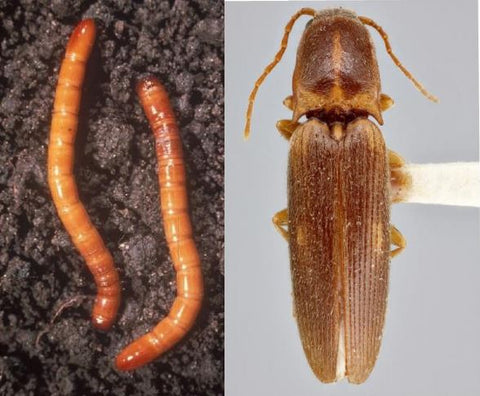
Wireworms are the soil-dwelling larvae of click beetles. These 3/4 inch pests have hard bodies that are slender, cylindrical and yellowish to brown in color. They live in the soil for 3-4 years while they complete their life cycle and can be identified by 3 sets of legs just behind their heads. The larvae spend their entire lives in the soil feeding off germinating seeds and tubers and can be extremely damaging to root systems becoming more destructive as they mature. Larvae overwinter in the soil and move up or down in the soil profile in response to environmental conditions, primarily temperature. Scouting should be done in the spring when soil temperatures are above 45°F at the 6 inch level or in late summer at the 18 inch level.
Target Crops
A variety of horticultural crops can be affected including potatoes, corn, wheat, carrots, cabbage, beans, dahlias and may other flowering crops. Early in the season, wireworms will feed on seeds and the roots of seedlings. Large populations of wireworms can result in reduced germination rates and dead or wilted plants. Later in the season, the main concern with wireworms becomes feeding injury on root crops, such as carrots, potatoes and beets. Feeding can vary from small holes and blemishes to deep and extensive tunneling.
Life Cycle
Depending on the species and environmental conditions, wireworm larvae live in the soil from 2 to 6 years. Larvae pupate in the soil and emerge as adults spring through late summer. The adult beetles then mate and lay eggs in the soil, preferably in shade provided by plants. Many larval generations may overlap in the soil; one to many species may also be present in a single field. Adults are not considered pests.
Beneficial Insect Control
Steinernema feltiae--a beneficial nematode species can be applied to the soil to infect and kill soil dwelling pests. Since wireworms can spend anywhere from 2-6 years feeding in the soil, these nematodes have ample opportunity to seek out larvae keeping the population at bay. Since wireworms spend so much time in the soil, it is important to reapply nematodes every year.
Introduction Rates and Release Information
Generally 1 million nematodes per 1,000 sq. ft. of soil medium when using the Sierra nematodes on a sponge. For each square foot you will need .66 gallons of water as a carrier to saturate to a depth of 2". Unless using nematodes immediately, store in a refrigerator. Do not freeze. When applying, use cool water and do not apply during hot dry conditions. See our Nematode Tech Sheet for more detailed information.
Insecticide Options
Several broad spectrum biopesticides applied as a soil drench are effective. LalGuard M52 is composed of the spores of the fungus Metarhizium brunneum strain F52. This can be used for a dip before planting dahlia tubers. PFR-97 contains the fungus Isaria fumorosa. AzaGuard and Azatin O contain the active ingredient Azadirachtin and act as Insect Growth Regulators. All can be used up to the day of harvest.
Cultural Control Tips
Diagnosing wireworm activity is critical to getting this garden pest under control. An effective technique to determine a wireworm infestation is to cut potatoes in half and bury them two inches deep in the soil. Flag with a bamboo stake. Wireworms are attracted to the potatoes and will seek them out. In one or two days dig up the potatoes and check to see if any wireworms are present. You can additionally use this potato method to 'trap' wireworms by drawing them out of your desired crops. Other methods to reduce wireworm populations include:
- Disturbing the soil by rototilling or plowing three or more times during spring or summer
- Crop rotation - fields previously planted in grasses are at a higher risk for wireworms
- Sanitation - remove dead plants and tubers throughout the season and at harvest
- Soil drying and/or flooding. Sugar beet and pacific coast wireworm (Limonius spp.) populations prefer moist soil and can be reduced by drying the top 15 inches of the soil for several weeks at midsummer
- Maintain soil health by using compost
Contact us for more specific recommendations for your region.
Management of Wireworms in Sweet Potatoes with peristent NY entomopathogenic nematodes.