Mealybugs Deconstructed
Mealybugs are easy to overlook when their numbers are small as they prefer to hide out in cracks and crevices and underneath leaf surfaces. But once they start to reproduce, it's a population explosion.
Continue readingShare a promo code here
Mealybugs are easy to overlook when their numbers are small as they prefer to hide out in cracks and crevices and underneath leaf surfaces. But once they start to reproduce, it's a population explosion.
Continue readingSound Horticulture was very busy and active in 2025, completing 25 years of business. Our sales increased, we added new and exciting products and deepened relationships with both customers and vendors.
Continue readingAmblyseius andersoni mites remain active over a very wide temperature range and are effective between 43° to 104°F, allowing them to be introduced much earlier in the growing season than other predatory mites.
Continue readingParasitoids wasps are a part of the aphid control picture. These tiny creatures lay an egg inside the host. This gives the new wasp shelter (a cozy little aphid mummy hut) and food as it develops and finally exits the host leaving behind an empty shell and a dead aphid.
Continue readingGreen lacewing eggs are an economical approach to biological control. They cost significantly less than the lacewing larvae and can be used with a variety of crops to control aphids, thrips, whitefly and more!
Continue readingOften when we walk into a greenhouse our gaze sweeps across the sea of green and we admire the colors, the light and the variety of plant life. We should however follow the admonitions from Les Mis and ‘Look Down’ to investigate where it all starts. In the soil. There are several pests that inhabit this dark underworld, and using biocontrols for these pests is the cornerstone for many programs.
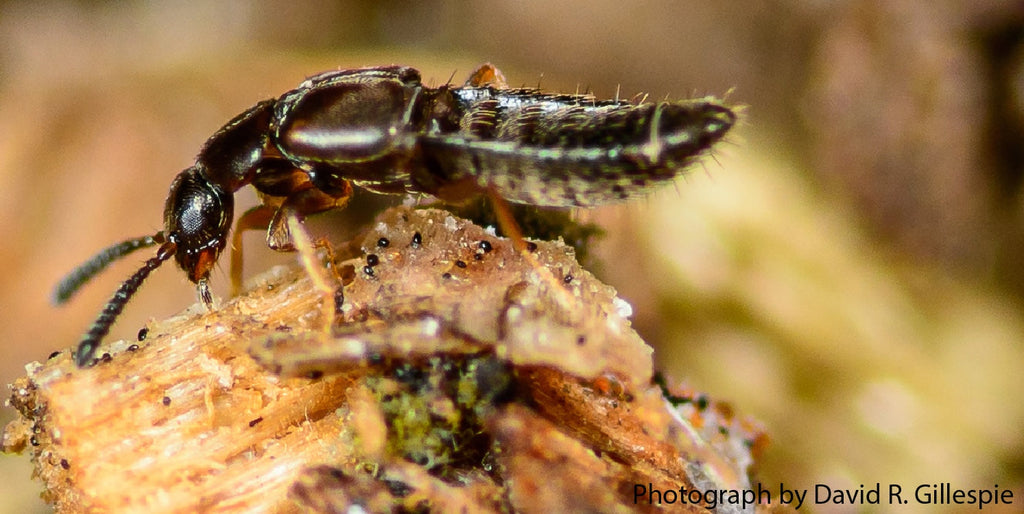
Continue readingDalotia are quick, aggressive predators and are always hungry. They are used to target fungus gnat larvae and thrips pupae, but the Dalotia diet also includes shorefly, root aphids, root mealybug, moth eggs, organic matter and mold.
Continue reading