Live insect orders take 5-7 days for processing and delivery. Learn more... Temporary increase in shipping for summer packaging. Live insect orders take 5-7 days for processing and delivery. Learn more...

Sound Horticulture Bug Blog

Blacksmith BioScience Showcase

Blacksmith BioScience Showcase

Blacksmith BioScience is a microbial development company whose mission is to harness advanced technologies in order to increase our understanding of the biology that controls and assists plant fertility. We use that knowledge to develop agricultural products that maximize existing soil nutrients, reduce fertilizer usage, increase yield and improve plant nutrition. Our long term goal is to significantly reduce harmful fertilizer and chemical runoff in ecological systems around the world through use of our patented, unique biofertilizers.

Continue reading

Thrips Control and Intraguild Predation

Thrips Control and Intraguild Predation

Intraguild Predation (IGP) occurs when one biological control agent feeds on another biological control agent. Predators that feed on the same prey are known as a guild. This occurrence can lead to a negative effect on the impact of the biocontrols. Find out more about which biocontrol agents are compatible with each other. 

Continue reading

Fall Newsletter: Attack of the Mealybugs

Fall Newsletter: Attack of the Mealybugs

Photo by Maddy Baker

As we move into the fall, we have received a spike of inquiries detailing mealybug outbreaks. 

With that in mind, we would like to share some information on the subject, hoping we can shed some light on a fairly common pest. There are two main species of Mealybug that we see here in the US. Longtailed mealybug (featuring tails that can protrude as long as the main body of the insect) and citrus mealybug(does not feature long tails). There is also a species of mealybug that can reside in soil so checking root balls can be crucial for plant care.

Mealybug Hosts

Longtailed Mealybug hosts: Dracaena, avocado, citrus, grapes, pear, persimmon, pineapple, tropical/subtropical plants, cycads, orchids, jade, oleander, beans, flax, guava, apple, potato, lemon, begonia, sedum, sempervivum and other ornamentals.

Citrus Mealybug hosts: As the name suggests, these are primarily pests of citrus but also enjoy ornamentals, vegetables, and fruits. They seem to prefer grapefruit over other citrus but other hosts include amaryllis, asparagus, begonia, cactus, coconut, coleus, croton, cucurbits, cyclamen, dahlia, yams, ficus, strawberries, gardenia, impatiens, poinsettia, sweet potato, mango, bananas, avocado, guava, pomegranate, pineapple, pear, apple, eggplant, tulips, milkweed, rosemary, and the list goes on!

Needless to say, these pests have a very wide host range and can attack many houseplants. Production growers should be vigilant of these pests and should consistently ship out clean material. It is always a good idea to inspect plants thoroughly, even the soil, before sending them off to customers.


Pictured are 3 different developmental stages of mealybugs right next to each other. Smaller nymphs leading up to a full grown female adult mealybug.

Photo by Brendan Kelly 

Mealybug Damage: Signs to Look Out for

Mealybugs and other insects with piercing-sucking mouthparts, like aphids, feed directly from the host plant vascular system. Feeding from this pest can lead to wilted, yellowed chlorotic leaves, premature leaf drop, stunted growth, and even death!! The sugary honeydew secreted from mealybugs as a byproduct of their feeding habit can cause sooty mold to grow on plant surfaces, hindering photosynthetic capability. The honeydew can also attract ants to the situation which can lead to distribution of the mealy pest.

 Options for Control:

For small infestations, a light isopropyl alcohol solution spray can help kill some of these pests on contact without damaging your plants. Mechanical removal by washing plants with water can help significantly as well. These pests are great at getting down into plant crevices and hidden points in new growth that will help keep the covered from sprays and washes, not to mention their waxy coating can also act as a barrier to sprays. Another defensive behavior that has been observed is the egg laying, adult female Mealybug covering stage 1 and 2 instars when sprays are being conducted.

Commercially, we can offer an entomopathogenic fungi such as Beauveria bassiana to help with mealybug outbreaks. Some of the products that we offer including this fungi are Velifer, Botanigard MAXX, Mycotrol, and BioCeres. Another successful biopesticide that we offer is the beneficial fungus product NoFly. This contains the fungal organism Isaria fumosorosea and works wonders for mealybug control. Long Shadow does include mealybug on its label but comes with caveat that cinnamon oil can be highly phytotoxic, so use caution and do a test before spraying everything.

Cryptolaemus montrouzieri are the best biocontrol option. These adults and their larvae are both predacious and a single Cryptolaemus can eat up to 250 small mealybugs over its lifetime. Their larvae do look oddly similar to the mealybug, although they appear a bit “harrier”, are much larger, and eventually turn into an adult Ladybird Cryptolaemus. They spend about 2-3 weeks as larvae and can live over a month as an adult. This gives them close to 50 days of life, which is pretty long compared to other beneficial predators. They may be more effective against citrus mealybug because they are known to lay eggs in cottony masses. The long tailed mealybug is still a good prey option for the Cryptolaemus but are not known to lay eggs which is an easy target for the predator. The predators will likely go after younger mealybugs first. The Cryptolaemus is a specialized predator so its’ main focus will be the Mealybug.

Chrysoperla rufilabris, or the Green Lacewing is a generalist predator that will eat just about anything (including its own kind!). These predators have shown success in controlling mealybugs and can be a cheap option for coverage of multiple pest issues.

Mealybugs can reproduce without mating, like aphids and each female can lay up to 350-600 eggs. The mealybugs can each live for around a month and will do damage the entire time. Some mealybugs can also be found colonizing in soil so scouting root masses can be an integral part of monitoring and control.

Sources of this information are:

-New Zealand Landcare Research

-NC State Extension

-University of California IPM

-University of Florida Entomology Department 

Cryptolaemus montrouzieri is the most commonly used biological control for mealybugs. Cryptolaemus is used to control mealybugs mainly in interior plantscapes. They can be used outdoors, but will not survive sub-freezing temperatures. To keep mealybug populations down to acceptable levels in greenhouses, several releases of Cryptolaemus may be necessary, particularly during winter months. They are less effective on longtailed mealybug (Pseudococcus longispinus) because this species lacks the cottony masses Cryptolaemus requires for egg laying.

Adults and young larvae prefer to eat mealybug eggs, but older larvae will feed on all stages of mealybugs. The adults can fly and cover large areas to search for food. If food is scarce they will also eat soft scales and aphids. 


BioCeres WP targets common insect pests such as aphids, whiteflies and thrips.

BioCeres WP is a contact biological insecticide that contains the entomopathogenic fungus Beauveria bassiana. This particular strain, ANT-03, was isolated from Lygus bugs in Canada. It works by germinating into the cuticle of insects and releasing toxins while also consuming the hemolymph.

One of the advantages of BioCeres is that it is an i-502 allowable product containing B. bassiana without the pyrethrins. BioCeres WP can also be tank mixed with several other biorational pesticides (check the technical info for specific combinations).

 NoFly WP is a naturally occurring fungi strain which acts as a natural pesticide. The concentrated spores of Isaria fumosoroseus strain FE 990. Highly effective under humid conditions, this microbial fungal spore germinates and infects a select group of pests, including aphids, whitefly, thrips, mealy bugs and more. Beneficial predator mites that may be in your growing system are not affected. See the link for additional label and important application instructions. NoFly WP is also compatible with many chemicals making it an excellent tool for use in an integrated pest management (IPM) program.


CHECK OUT THESE PRODUCTS IN OUR ONLINE STORE

Continue reading

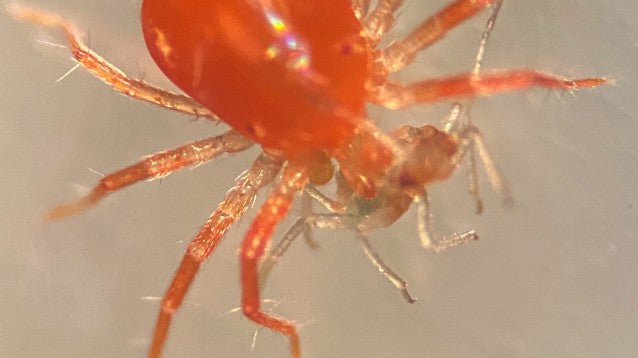
Broad Mite Biology and Management

Broad Mite Biology and Management

Broad mites feed on buds, blossoms, new leaves, and young fruit which results in damage similar to that from hormonal weed killers. Generally, this manifests as bronzed leaves with down-curling margins, aborted and distorted buds and vegetation, twisted shoots, and misshapen or russeted fruit.

Continue reading

Moment Lenses Now Available Through Our Referral Link!

Moment Lenses Now Available Through Our Referral Link!
At Sound Horticulture, we use Moment lenses to scout for pests on our clients crops. We have found that the ease of use and image clarity puts moment lenses a step above the competition. The lenses require the moment case and they are available for many popular smartphones. Once you have the case it is as simple as a quarter turn to mount the lens. Click here to check out Moment's offerings!  Continue reading

Invasive Alert!: Emerald Ash Borer

Invasive Alert!: Emerald Ash Borer

Keep an eye out for the Emerald Ash Borer, Agrilus planipennis. It has been detected in 24 states, including our state of Washington, and parts of Eastern Canada. Civic involvement in pest ID and entomology is a powerful thing. Please inspect your local trees. 

In Washington, our native "Oregon Ash" Fraxinus latifolia is of particular concern. Additionally white ash (F. americana) and green ash (F. pennsylvanica) are common targets as they are often planted as ornamental shade trees. If you suspect EAB, please call 1-800-443-6684.

See this link for more information regarding ID, and what you can do. 

Continue reading

Beneficial Entomopathogenic Nematodes for Pest Control

Beneficial Entomopathogenic Nematodes for Pest Control

It's commonly known that there are pathogenic nematodes which can cause damage to plants, but did you know that there are species of nematodes which are actually used to control pests? We refer to these beneficial nematodes as entomopathogenic nematodes. We like to think of beneficial nematodes as a fantastic starting place for those new to biocontrol. Why? Because they truly work so well, AND they are compatible with many pesticides and fungicides. In other words, even conventional growers can seamlessly integrate nematodes into their operation without forfeiting the use of various conventional pesticides they may be using in their IPM program. Sound too good to be true? We know these little roundworms are extremely tough and efficacious. As an example, nematodes can actually freeze their metabolism in the absence of adequate food or oxygen, but continue to survive until circumstances improve. This state is called "cryptobiosis". Additionally, after the 1981 Columbia space shuttle disaster, nematodes were the only known survivors.

When you are considering which nematodes to purchase, consider not only the correct speci you need to control the problematic pest at hand, but also the production method. Nematodes produced "in vivo" tend to yield a very high numbers of infective juveniles which are largely responsible for the killing of pests. This production method utilizes wax worm cadavers to breed healthy nematodes, which contain a very high level of infective bacteria (see the featured diagram of the life cycle). In vivo nematodes also requires a much lower application rate per sq. ft. of soil when compared with "in vitro" nematodes. 

Our Sierra nematodes are produced in vivo and yield exceptional results for our customers. For more information about Sierra nematode production, species available, and some guidelines for speci and pest pairing, refer to this link or feel free to contact us directly for more information.


Continue reading

Watch Your Feet!

Watch Your Feet!

When it comes to your IPM program, are you employing all the stops? Are you adequately considering these components of your IPM program?


1)Removing debris (cultural control)- fungal pathogens (i.e. botrytis).

2)Properly sanitizing surfaces, pots, soil, and tools.

3)Stopping entry and vectoring at the door!


Proper sanitation is imperative for maintaining a good integrated pest and disease management program and stopping pests “at the door” should be the first line of defense. Within the larger industry, there are an array of needs in the sanitation department. Without being able to touch on them all, let’s talk about your feet! As we approach fall weather, pests are certainly looking to hitch a ride into indoor environments and greenhouses. That said, vectoring pests in and out of various facilities, greenhouses, or rooms, is a potential problem all season long. How are your growers and employees moving through the facility? Avoid allowing growers to work in contaminated areas and then move to propagation later in the day. Consider supplying a change of clothes and even crocs or boots for employees. 

We work to stay abreast of all the updates and changes in the industry and in biocontrol and share that information with all of you. That said, some trusted principles and products have not changed for decades and remain trusted industry standards.

To assist with this continued concern, we made have ordered in products to make it easy for our customers. Whether you are moving from stock to finishing areas, or from outdoors to indoors, having a sanitation mat is critical for vectoring reduction. For fall, we are combining the long-standing industry sanitation product, Green Shield, with the sanitation mats as a package deal. We don’t want you to call us in crisis!

For $147 you can receive 1 gallon of Green Shield with our favorite type of sanitation mat.

Continue reading

Sound Hort's Sounding Board

Sound Hort's Sounding Board

We’ve seen so many changes over the last couple years, within our business as well as the many varied sectors of organic agriculture, conventional agriculture, and larger horticultural industries. The use of biocontrol is expanding with each year, and with that, our business has been growing. In fact, we just moved to a larger facility to accommodate additional warehousing of biological products and to expand the capacity of our shipping facility. Last year, we started our ecommerce online store to accommodate customers who prefer to shop online. As an extension of that, we are working to keep our blog updated with pertinent information for all of you working to continually improve and learn. We pride ourselves in our customer service and go out of our way to host workshops, make ourselves available to customers, and to openly share pertinent information to all of you who are trying shore up your pest management.

It’s estimated that 40% of the world’s food production is lost each year due to pest and diseases related failure. Our goal is to provide tactics and products in order to properly manage pests, while remaining environmentally conscious. Additionally, we encourage growers to develop natural habitats for hosting beneficial populations. We recognize that the growth we are experiencing is an industry-wide and environmental success. Pest resistance to conventional chemicals is not going away, while the domestic and international tightening of chemical regulation is on the rise. As growers experience the limitations of chemicals, they are now leaning on biological controls and biologically based practices. Meanwhile, consumers are asking that their products be produced using clean practices, whether it be ornamental crops, food crops, herbs, cannabis, or the plant based inputs of their supplements…EVERYTHING! We find this grassroots movement extremely exciting and encouraging!

So welcome to the green side! We are here to assist.

Continue reading